Sauna and Cold Plunge Setup at Home: Contrast Therapy
A sauna and cold plunge setup at home: what to buy first, how to plan space and electrical, and the contrast therapy mistakes that cost thousands.
The verdict
If money's tight, buy the cold plunge first, then add a sauna later. A chiller-fed tub delivers the harder-to-replicate stimulus and costs a fraction of a quality sauna.
A hot shower is a passable stand-in for a sauna; nothing at home replicates a 45°F plunge. Start with a chiller + tub (~$1,500-2,500), live with it for a season, then add a 1-2 person sauna when you've confirmed the space, the drainage, and the electrical can handle round two. The full setup done right lands around $5,000.
We earn a commission if you buy through this link. It never changes the pick.
The Plunge Lab · Updated 2026-06-15 · 9 min read
Specifications read in full, arithmetic shown.
A deciding chart is drawn for this guide once its figures are sourced. We would rather show nothing than plot a number we cannot cite.
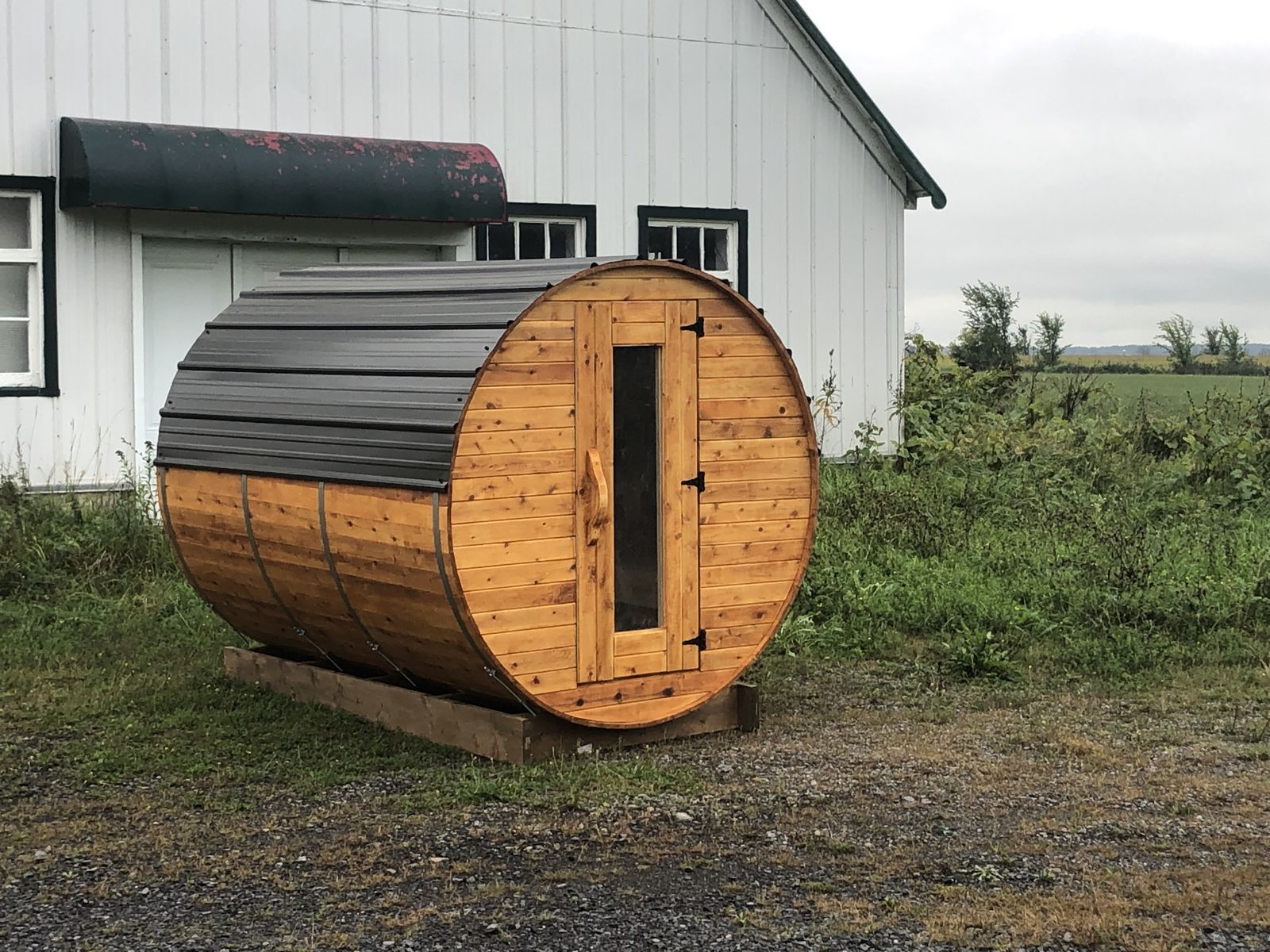

Most people who ask "how do I build a contrast setup at home" are really asking two questions at once: what do I actually buy, and how do I not waste $4,000 on the wrong sequence of purchases? A sauna-and-plunge pairing is the most rewarding recovery setup you can own (alternating 180°F dry heat with 45°F water does something neither does alone) but it's also where home buyers make the most expensive mistakes, usually by buying both halves at once and discovering the electrical panel can't feed them.
Exterior dimensions, one scale. Sources: Sun Valley Saunas listing (DYN-1101-01), sunhomesaunas.com, redwoodoutdoors.com.
The contrast protocol: what you're actually building toward
Before you spend a dollar, know the thing you're trying to do. Contrast therapy is simple: get hot, get cold, repeat, and always finish on cold. Ending on heat leaves you flushed and sweating for 20 minutes; ending on cold closes the loop, constricts the vasculature, and is the part people describe as the "high." Here's the protocol to start with.
| Round | Sauna (hot) | Plunge (cold) | Notes |
|---|---|---|---|
| 1 | 10-15 min at 170-195°F | 1-3 min at 45-55°F | Don't rush the first heat; you want a full sweat before cold |
| 2 | 8-12 min | 1-3 min | Rest 1-2 min between transitions; don't sprint |
| 3 (optional) | 8-10 min | 1-2 min | End here, on cold |
Total time: 35-55 minutes for 2-3 rounds. Beginners should start with two rounds and shorter cold holds (30-60 seconds). The cold doesn't need to be brutal to work: 50°F for 90 seconds beats 38°F for 10 seconds you white-knuckle through. If you want the full breakdown of how cold the water can realistically get and stay, that comes down to the chiller, which we cover in our chiller-specs guide. The short version: BTU per gallon is the number that decides whether your tub holds 45°F in July.
Space & electrical: the part people skip and regret
This is where home contrast setups die. Walk the space before you shop.
- Footprint: a 1-2 person sauna needs roughly 4×4 to 5×6 ft plus clearance; a plunge tub another 3×6 ft with room to climb out without slipping. Budget a 10×10 ft zone minimum if you want both side-by-side.
- Electrical, the make-or-break: a chiller and a small infrared sauna will both run on standard 120V, but a traditional barrel or cabin sauna with a 6-9 kW heater needs a dedicated 240V circuit, often 40-60 amps. Two big draws on one panel is how people end up calling an electrician mid-project. If you want traditional heat, price the 240V run before you buy the sauna; it's frequently $600-1,500.
- Drainage: a plunge holds 80-150 gallons. You will drain and refill it. Indoors without a floor drain means a pump and a hose out a door or to a utility sink. Garage with a drain is ideal; a finished basement with no drain is a recurring headache.
- Indoor vs outdoor: garage and covered patio are the sweet spot: drainage is easier, heat and humidity vent freely, and a barrel sauna is built for outdoor placement anyway. Pure indoor works for an infrared cabin + chiller tub, but plan for steam, splash, and a GFCI outlet.
Budget tiers: what you actually get
| Tier | What you get | Ballpark |
|---|---|---|
| Entry (~$2,000) | Inflatable or stock-tank plunge + ~0.5 HP chiller (good to ~50°F) + a budget 1-person infrared cabin on 120V. Functional, not pretty. | $1,800-2,500 |
| Mid (~$5,000) | Insulated hard-shell plunge + 1 HP chiller (holds 40-45°F) + a 2-person barrel or cabin sauna. Add the 240V circuit. This is the setup most people are happy with long-term. | $4,500-6,000 |
| Premium ($10,000+) | Integrated/built-in plunge with chiller + ozone/filtration, a traditional Finnish cabin with a quality heater, a poured pad, plumbed drain, and a finished surround. | $10,000-20,000+ |
Note that the plunge half of the budget is dominated by the chiller, not the tub. A $300 stock tank fed by a real chiller outperforms a $1,200 "designer" tub with an undersized cooler. Spend on the cold machine. Browse 1 HP plunge chillers on Amazon.
What to buy first if money is tight
Buy the cold side first. Here's the reasoning we keep coming back to: a hot shower, a space heater, or a $200 portable steam unit will get you 70% of the sauna benefit in a pinch, but there is no household substitute for 45°F water. The plunge is the irreplaceable half, so it earns the first dollars. Start with a chiller-equipped plunge tub , run it for a season, and confirm your drainage and space actually work before you commit to round two. When you do add heat, decide between traditional and infrared using our barrel-vs-infrared breakdown: infrared plugs into 120V and installs indoors, while a barrel needs outdoor space and 240V but gives you the real ritual. Infrared cabins start around $1,200.
Skip these: the mistakes that cost real money
- Buying both at once before checking the panel. The single most common regret. Confirm 240V capacity (or commit to infrared) before you order a traditional sauna.
- Buying a beautiful tub with a weak chiller. A 0.5 HP cooler on a 150-gallon tub will fight a losing battle in summer. Size the chiller to the tub, not the other way around.
- Ending on heat. A protocol mistake, not a gear one, but it ruins the payoff. Always finish cold.
- No drainage plan. "I'll figure out the water later" becomes a 200-gallon bucket-brigade you stop wanting to do. Solve drainage before the tub arrives.
- Stacking both heaters on one 15-amp circuit. Trips the breaker every session. Map your loads.
Hidden costs no one quotes you
- Electrical work: a dedicated 240V/50A run for a traditional sauna is $600-1,500 installed. A GFCI outlet for the chiller is cheaper but not free.
- Drainage / plumbing: a submersible pump runs $80-150; a plumbed floor drain during a build is far more. Budget it as part of the plunge, not an afterthought.
- Water & chemicals: ozone or a small amount of hydrogen peroxide to keep the plunge clean, plus the water itself on each refill. Figure $10-25/month if you're filtering and topping up rather than draining weekly.
- Electricity to run it: a chiller holding 45°F runs intermittently and costs roughly $15-35/month depending on ambient temp and insulation; a sauna adds $0.30-1.20 per session.
- Footprint cost: the 100+ sq ft you give up is real, especially in a garage you also park in. Measure honestly.
Bottom line
A home contrast setup is one of the best recovery investments you can make, but the order of operations is everything. Buy the cold plunge first (it's the half you can't fake), get your drainage and electrical sorted while you live with it, then add a sauna sized to the circuit you actually have. Done right, the full setup lands around $5,000, runs for pennies a session, and finishes, always, on cold.
Compare contrast-therapy setups on Amazon →
Frequently asked
- Should I buy the sauna or the cold plunge first?
- Buy the cold plunge first if budget is the constraint. A hot shower or a small steam unit is a passable stand-in for a sauna, but nothing at home replicates a 45°F plunge, so the cold side earns the first dollars. Add the sauna once you've confirmed your space, drainage, and electrical can handle round two.
- Do I need 240V for a home contrast setup?
- Not necessarily. A chiller and a small infrared sauna both run on standard 120V. You only need a dedicated 240V circuit (often 40-60 amps) for a traditional barrel or cabin sauna with a 6-9 kW heater. If you'd rather avoid the electrical work, go infrared on the heat side and keep everything on 120V.
- What does a good home sauna and cold plunge setup cost?
- An entry setup runs about $1,800-2,500 (inflatable plunge, small chiller, budget infrared cabin). A mid-tier setup most people are happy with long-term lands around $4,500-6,000 (insulated tub, 1 HP chiller, 2-person sauna, plus a 240V circuit). Premium built-in setups start at $10,000 and climb from there.
- Why should I always end the contrast protocol on cold?
- Ending on heat leaves you flushed and sweating for 20 minutes and softens the effect. Finishing on cold constricts the vasculature, closes the loop, and produces the alertness most people are chasing. Run hot first, alternate for 2-3 rounds, and make the last round a cold one.
- Do I need special drainage for a cold plunge indoors?
- You need a plan for it. A plunge holds 80-150 gallons that you'll periodically drain and refill. A garage or utility space with a floor drain is ideal. Indoors with no drain means a submersible pump ($80-150) and a hose to a sink or out a door. Solve drainage before the tub arrives, not after.