Infrared vs Traditional Sauna: Barrel or Infrared?
Infrared vs traditional barrel sauna: different heat, different space, very different running costs. How to choose the one you'll actually use.
The verdict
For most homes: a 1-2 person infrared cabin. For the full ritual + outdoor space: a barrel sauna.
Infrared wins on practicality: it plugs into a standard 120V outlet, installs indoors in a closet or spare room, warms up in 15 minutes, and costs pennies per session. Choose a barrel only if you have outdoor space, a 240V circuit, and specifically want löyly and the heat-cold contrast ritual.
We earn a commission if you buy through this link. It never changes the pick.
The Plunge Lab · Updated 2026-06-02 · 6 min read
Specifications read in full, arithmetic shown.
A deciding chart is drawn for this guide once its figures are sourced. We would rather show nothing than plot a number we cannot cite.
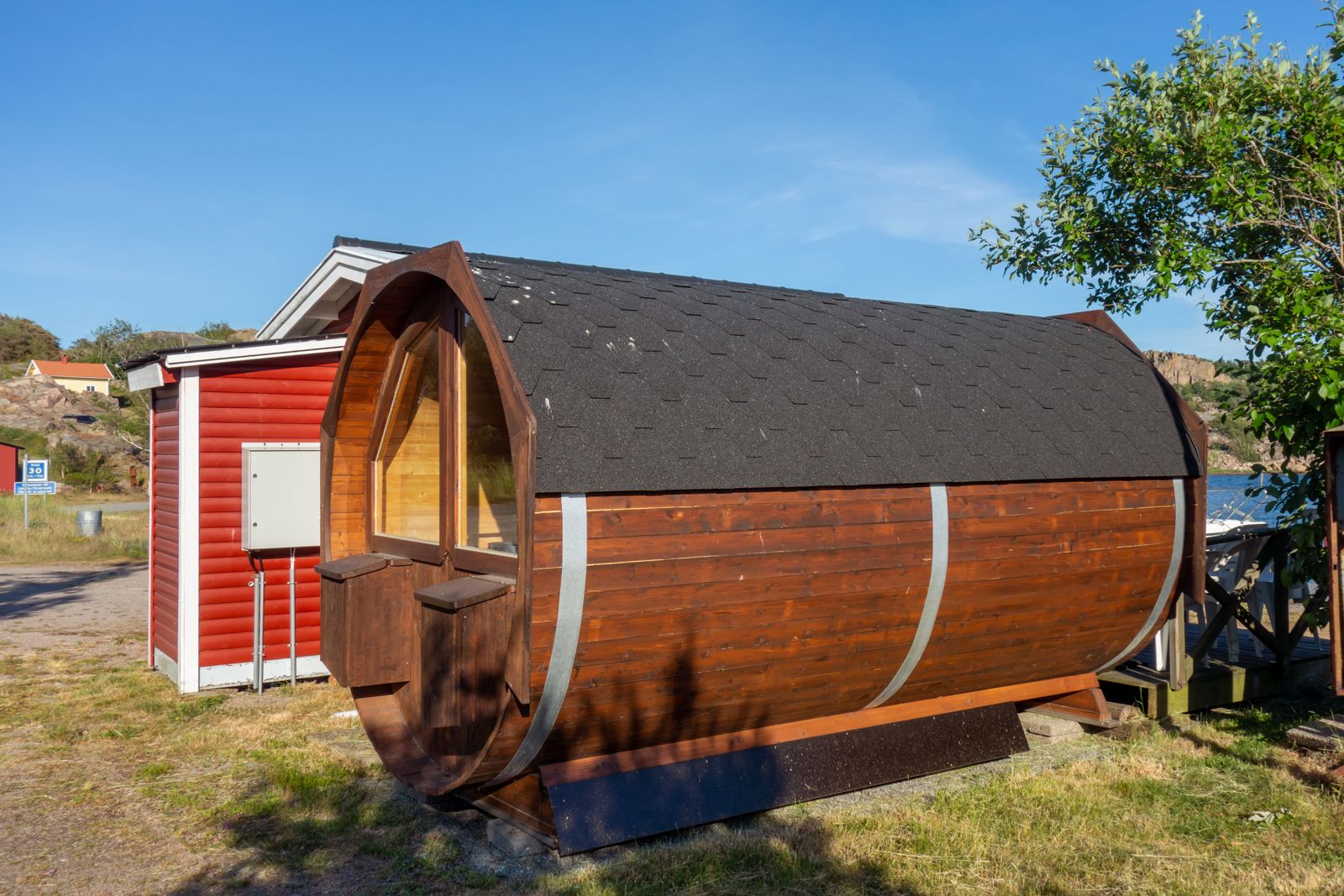

"Barrel sauna vs infrared" is the wrong question. They are not competing products: they produce different physiological effects, install in different spaces, and cost very different amounts to run. Pick by the answer to one question: do you want a traditional Finnish sauna experience, or do you want heat therapy without the steam?
Exterior dimensions, one scale. Sources: Sun Valley Saunas listing (DYN-1101-01), sunhomesaunas.com, redwoodoutdoors.com.
The 60-second decision
- Pick a barrel (or any traditional) sauna if you want 160-200°F dry or steam heat, the ability to do löyly (water over stones), and the social/ritual experience. Trade-off: longer warmup (30-45 min), higher electric cost, outdoor install usually required.
- Pick an infrared cabin if you want 120-150°F radiant heat, fast warmup (15 min), low electric draw, and indoor installation in a spare room or closet. Trade-off: a very different sensation (gentler, no steam), and some people find it underwhelming.
Side-by-side
| Barrel / traditional | Infrared cabin | |
|---|---|---|
| Operating temp | 160-200°F (air heats your skin) | 120-150°F (light heats your tissue) |
| Warmup time | 30-45 minutes | 10-15 minutes |
| Session length | 10-20 min | 30-45 min |
| Power draw | 6-9 kW (often needs 240V circuit) | 1.6-2.4 kW (standard 120V outlet) |
| Cost to run, per session | $0.60-1.20 | $0.15-0.30 |
| Install | Outdoor pad or weatherproofed space | Indoor: closet, basement, spare bedroom |
| Typical price (1-2 person) | $3,500-7,000 | $1,200-3,500 |
| Löyly (water on stones) | Yes, this is the point | No. Never pour water on infrared elements |
| Sweat profile | Heavy, fast (skin reacts to ambient heat) | Slower, sustained (radiant penetration) |
Where each one wins
Barrel sauna wins if…
- You have outdoor space and a 240V circuit (or can run one)
- You want the traditional ritual: löyly, scents, the heat-cold contrast pairing with a plunge
- You'll have 2+ people in there sometimes
- You don't mind the higher electric cost
Browse barrel saunas on Amazon.
Above roughly $4,000 the market changes shape. Amazon's barrel listings are mostly imported flat-pack kits; past that price you are buying from a manufacturer, made to order, with a lead time. Sweat Kingdom is one such builder: Idaho-made, indoor and outdoor. Its 2-person Sweat Barrel lists at $5,145 (up to $9,645 for the 6-person with options, read October 2026 from their product feed), which sits inside the $3,500-7,000 band in the table above. We have not used one. That is a real limit on this recommendation: it rests on published specifications and build description, not on hands-on testing, and if your budget stops at $3,500 the kits above remain the honest answer.
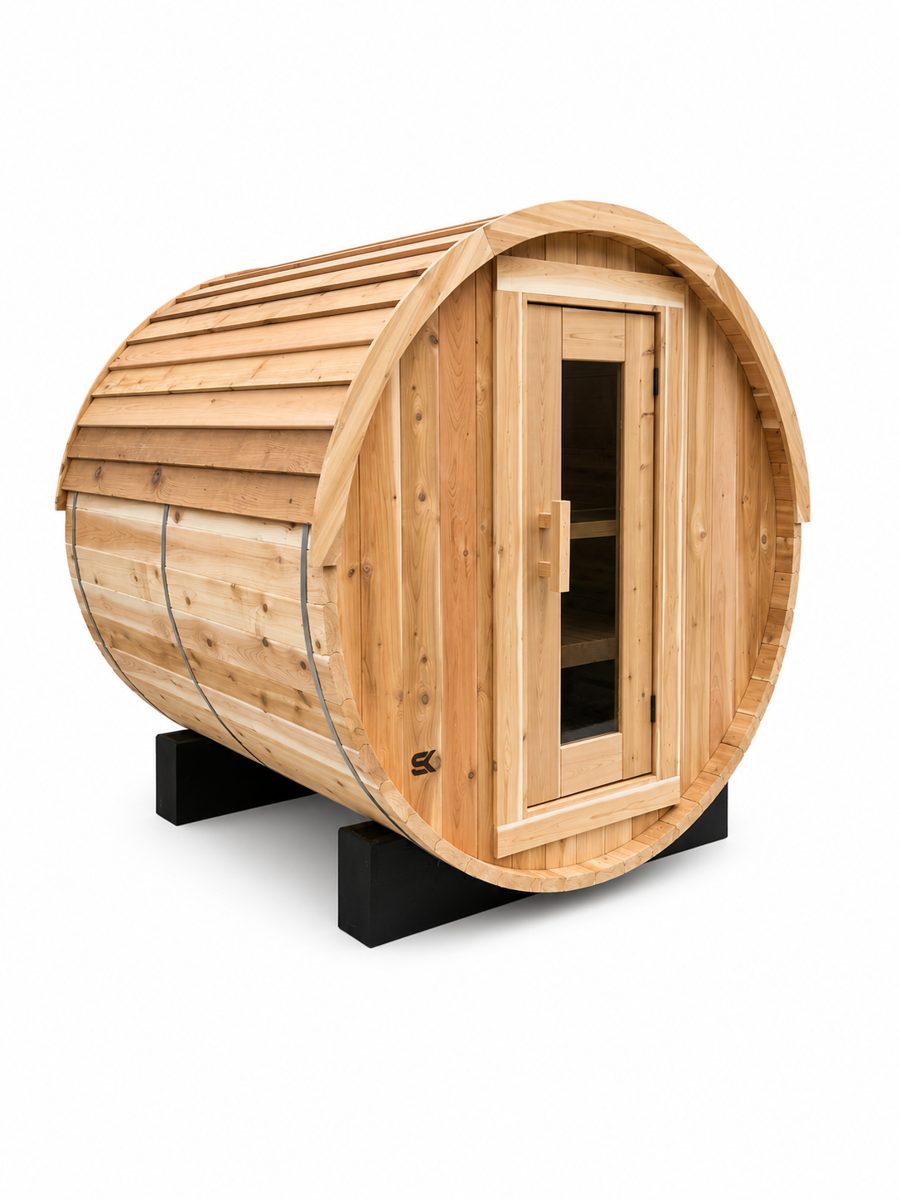
We earn a commission if you buy through the Sweat Kingdom link. It never changes the pick: the verdict above still sends most readers to an infrared cabin, which earns us nothing.
Infrared cabin wins if…
- You're installing indoors (apartment, basement, spare room)
- You're on a standard 120V outlet (most infrared cabins plug into a normal wall)
- You want a 30-minute session you can do during a podcast
- Your goal is recovery / mild heat therapy, not the sauna ritual
Browse infrared cabins on Amazon.
Common myths
- "Infrared sweats out toxins better than traditional." The peer-reviewed evidence here is thin. Sweat is mostly water + sodium regardless of heat source.
- "Traditional saunas burn more calories." Both burn ~30-50 kcal per session above baseline. Trivial either way.
- "Low-EMF infrared is required." All modern infrared cabins from reputable brands now publish EMF readings under 3 mG at the user position. Don't pay a premium for "low-EMF" branding; just check the published spec sheet.
Hybrid options
A small but growing category: traditional saunas with added infrared emitters. They work, but you're paying for both systems and the infrared portion underperforms because the cabin is sized for traditional convection. Skip these unless one is the only one your space will allow.
Bottom line
If you have outdoor space, want the ritual, and don't mind the electric cost: barrel sauna. If you're going in a closet, want fast and cheap to run, and prioritize daily consistency over peak intensity: infrared. They're different tools, and either is fine; just pick the one that fits the space you actually have.
Frequently asked
- Is an infrared sauna as good as a traditional sauna?
- It depends what you mean by 'good.' Infrared delivers gentler radiant heat at 120-150°F and is easier to tolerate for longer sessions; traditional saunas hit 160-200°F and let you do löyly (water on stones) for the classic experience. They're different sensations, not better-or-worse. If you want the ritual and heat-cold contrast, traditional wins; if you want a low-fuss daily session indoors, infrared wins.
- Can I put an infrared sauna indoors?
- Yes, that's its main advantage. Most 1-2 person infrared cabins plug into a standard 120V outlet and install in a spare room, basement, or large closet. Traditional barrel saunas usually need outdoor space and often a 240V circuit.
- Do barrel saunas need a 240V circuit?
- Most do. Traditional sauna heaters draw 6-9 kW, which typically requires a dedicated 240V circuit. A few small plug-in 120V heaters exist but heat slowly and top out cooler. Budget for an electrician if you go traditional.
- Which sauna is cheaper to run?
- Infrared, by a wide margin: roughly $0.15-0.30 per session versus $0.60-1.20 for a traditional sauna, because infrared draws far less power and warms up in 15 minutes instead of 30-45.